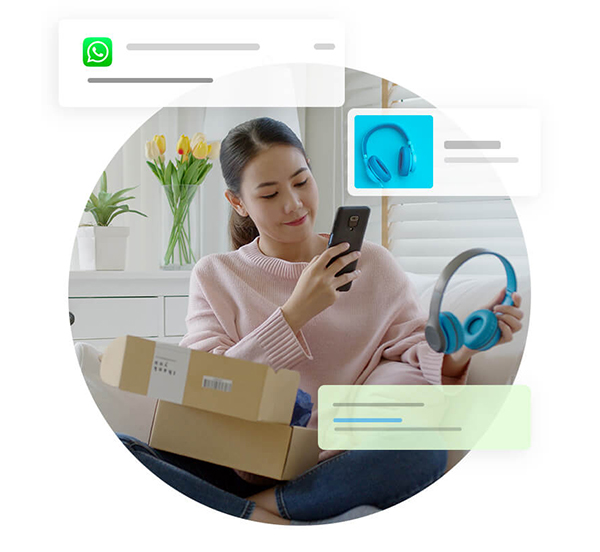
In the digital age, businesses are constantly seeking efficient and scalable ways to communicate with their customers. One of the most powerful tools in this regard is the WhatsApp Business API, which allows companies to send messages, manage conversations, and even make calls through WhatsApp. However, understanding the WhatsApp API subscription plans can be complex due to the various costs involved. This article breaks down everything you need to know about the WhatsApp API pricing model, including the different subscription plans, associated fees, and how to choose the right provider for your business.
What Is the WhatsApp Business API?
The WhatsApp Business API is a tool designed for medium and large businesses that want to communicate with customers at scale. It offers features such as automated messaging, personalized interactions, CRM integration, and advanced analytics. Unlike the free WhatsApp Business App, which is suitable for small businesses, the WhatsApp Business API requires a subscription and involves additional costs.
Key differences between the WhatsApp Business App and the WhatsApp Business API include:
- User Base: The app is for small businesses, while the API is for enterprises.
- Automation: The API supports advanced automation, while the app has limited capabilities.
- Integration: The API integrates with business systems, whereas the app does not.
- Pricing: The app is free, but the API involves subscription fees and other charges.
How Does WhatsApp API Pricing Work?
The WhatsApp Business API pricing model is based on conversation-based billing. Businesses are charged depending on whether they initiate a conversation or respond to one initiated by a customer. Here’s a breakdown of the key components:
1. User-Initiated Conversations (Service Conversations)
When a customer sends the first message, it opens a 24-hour customer service window. During this time, businesses can reply freely without incurring per-message charges — as long as they use free-form text or utility templates.
- Free Messages: Within the 24-hour window, all messages are free, including utility templates.
- Marketing Templates: These are charged, even within the 24-hour window.
- Authentication Templates: These are also charged but typically less expensive than marketing templates.
2. Business-Initiated Conversations (Template-Based Pricing)
If a business sends a message after the 24-hour window, it must use pre-approved template messages. There are three types of templates:
- Utility: For transactional messages like order confirmations or shipping updates.
- Authentication: For one-time passcodes or verification codes.
- Marketing: For promotional content like discounts or product launches.
Each template type has its own cost, and businesses are charged separately for each category used in a conversation.
3. Country-Specific Rates

The cost of messages depends on the country code of the recipient. For example, sending a message to the United States may cost $0.004, while sending one to India could cost as little as $0.0014. These rates vary across countries and are updated regularly.
Key Costs Associated With WhatsApp API Subscription Plans
While the WhatsApp Business API itself is free to access, there are several additional costs that businesses should consider:
1. BSP Fees (Business Solution Provider Fees)
Most businesses use a Business Solution Provider (BSP) to access the WhatsApp API. These providers charge varying fees, including:
- Setup Fees: Some BSPs charge a one-time fee to set up the API.
- Hosting Fees: If using an on-premises API, the BSP may charge for server hosting.
- Per-Message Markups: Some BSPs add a fee per message sent or received.
- Monthly Subscription Fees: Many BSPs offer tiered pricing plans based on message volume.
For example:
– Sleekflow charges $15/month per WhatsApp number.
– Wati limits users to 3 per plan, making it unsuitable for growing teams.
– Twilio adds a $0.005 markup per message.
– Respond.io offers no setup, no per-message fees, and free API access.
2. Inbox Management Software
The WhatsApp API does not have a built-in frontend, so businesses need to use inbox management software to handle incoming and outgoing messages. These tools often come with their own subscription fees.
3. Call Charges
Businesses can also make outbound calls via the WhatsApp Calling API, which incurs additional costs. These are based on:
– Recipient’s country code
– Call duration (charged in 6-second increments)
– Monthly volume (higher volumes lead to lower rates)
Choosing the Right WhatsApp API Subscription Plan
Selecting the right WhatsApp API subscription plan depends on your business needs, budget, and communication volume. Here are some considerations:
1. Sales Teams
Sales teams often initiate conversations, which can be costly. Opt for a BSP with low or no markup fees if you send many messages.
2. Support Teams
Support teams primarily respond to customer inquiries. Since user-initiated messages are free within the 24-hour window, this is the most cost-effective option.
3. Marketing Teams
Marketing messages are the most expensive due to marketing template charges. Choose a BSP that doesn’t add markups and ensure compliance with WhatsApp’s policies to avoid spam penalties.
4. Engineering Teams
Engineering teams usually send transactional messages (e.g., password resets). Avoid BSPs with per-message fees to reduce costs.
Top WhatsApp API Providers and Their Pricing Models
Here’s a look at some of the most popular WhatsApp API providers and their pricing models:
| Provider | Monthly Fee | Per-Message Markup | Additional Notes |
|---|---|---|---|
| Respond.io | Free | None | No setup or per-message fees |
| Twilio | $0.005/message | $0.005 | Charges for both sent and received |
| 360dialog | $53–$218/month | None | Hosted on Meta’s cloud |
| Sleekflow | $15/number/month | None | Charges per WhatsApp number |
| Wati | Varies | None | Limited user capacity |
FAQs About WhatsApp API Subscription Plans
Q: Is the WhatsApp API free?
A: The API itself is free, but businesses must pay for BSP services, inbox management software, and message charges.
Q: Can I use the WhatsApp API directly?
A: No. You need a BSP to access the API, as it requires technical integration and management.
Q: Are there any free tiers available?
A: Yes. Businesses get 1,000 free service conversations per month, but beyond that, charges apply.
Q: What happens if I exceed my monthly limit?
A: You’ll be charged for each additional message based on the template category and recipient’s country code.
Conclusion
Understanding WhatsApp API subscription plans is crucial for businesses looking to leverage WhatsApp for customer communication. While the API itself is free, the associated costs — including BSP fees, inbox management software, and message charges — can vary significantly depending on the provider and usage patterns.
To minimize costs, choose a BSP with transparent pricing and no per-message markups, such as Respond.io. Additionally, take advantage of free entry points like Click to WhatsApp ads to extend the 24-hour customer service window and reduce expenses.
By carefully evaluating your business needs and selecting the right WhatsApp API subscription plan, you can effectively scale your customer engagement while maintaining control over your communication costs.
About the Author